Cumulative Lebanese Cars Market Dropped by 27.92% YoY by February 2026
According to market sources, cumulative Lebanese car market decreased by 27.92% year-over-year (YoY) by February 2026, recording 1,141cars. The distribution of cars was as follows:
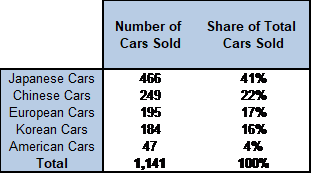
Furthermore, the leading sellers of vehicles in Lebanon were Toyota, Kia, and Jetour with number of vehicles sold in February 2026 alone totaled 210, 116, and 98 respectively.
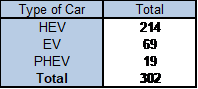
It is interesting to note that in February 2026, the share of non-gasoline cars and SUV (Hybrid, Plug-in Hybrid and Fully Electric cars) recorded a total of 302 automobiles, distributed as follows:
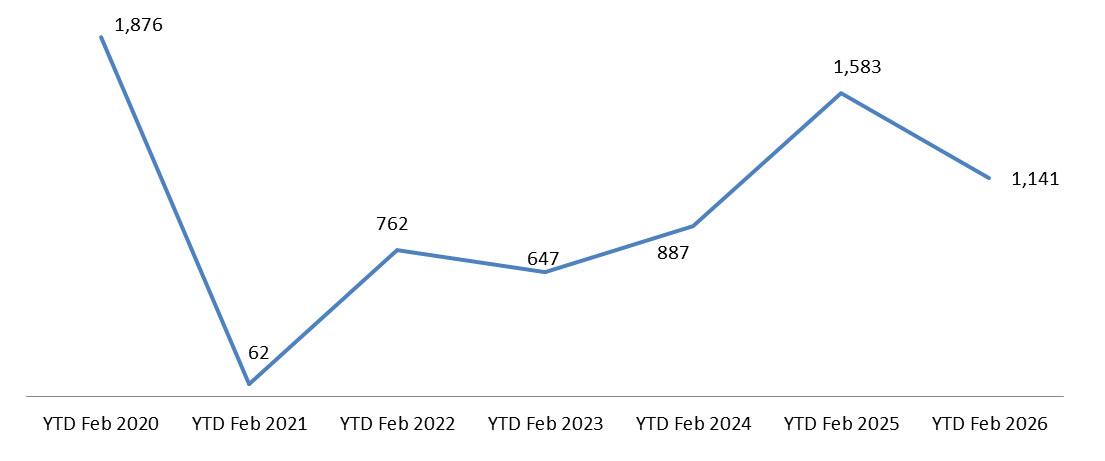
Lebanon’s car market has faced significant fluctuations in recent years. Sales of new cars are much lower now compared to 2019 (1,838), when cars were still being purchased through checks. Currently, the demand for new vehicles is restricted by the limited financing options, exacerbated by the lower purchasing power of the people. As such, there has been a noticeable decline in car registrations (1,141) by February 2026 due to the outload of the Hezbollah-Israel conflict, which weakened consumer confidence and discouraged high-value purchases such as vehicles. The number of cars sold is still much lower than the sales figures from 2019, despite a small increase in the past couple of months. This shows that while the market is indeed recovering, it still faces big challenges and is far from returning to its pre-crisis levels.
Year to Date (YTD) Growth of Registered Passenger Cars by February (2020-2026)
Disclaimer:
This article is a research document that is owned and published by BLOMINVEST BANK SAL.
No material from this publication may be modified, copied, reproduced, repackaged, republished, circulated, transmitted or redistributed directly or indirectly, in whole or in any part, without the prior written authorization of BLOMINVEST BANK SAL.
The information and opinions contained in this document have been compiled from or arrived at in good faith from sources deemed reliable. Neither BLOMINVEST BANK SAL, nor any of its subsidiaries or affiliates or parent company will make any representation or warranty to the accuracy or completeness of the information contained herein.
Neither the information nor any opinion expressed in this research article constitutes an offer or a recommendation to buy or sell any assets or securities, or to provide investment advice.
This research article is prepared for general circulation and is circulated for general information only.