Lebanon’s Cumulative Trade Deficit Up by 7.91% YoY to $11.47B by August 2026
According to the Lebanese Customs Administration, Lebanon’s cumulative trade deficit increased by 7.91% year-over-year (YoY), to reach $11.47B by August 2026. This change was driven by a cumulative 4.78% YoY ($13,664 million) surge in imports by August 2026 and a 9.03% YoY ($2,196 million) fall in exports during the same period.
The widening trade deficit reflects the lingering impact of the conflict on Lebanon’s productive and export capacity, particularly after months of disrupted agriculture, supply chains and transport activity. The easing of hostilities and renewed ceasefire in June supported a gradual recovery in domestic activity and the return of displaced households, strengthening local demand and businesses’ need to replenish inventories. However, this recovery benefited imports more than exports, as external orders remained constrained by regional instability and elevated shipping costs through August, despite the reopening of the Saudi market to Lebanese exports in June.
Lebanon’s Balance of Trade (USD Million)

YTD: Year to Date
Top Import Destinations for Lebanon (YTD up to August 2026)
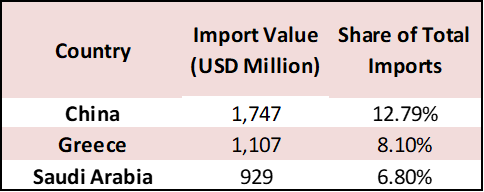
The top three import destinations by August 2026 were China, Greece, and Saudi Arabia accounting for 12.79%, 8.10%, and 6.8% of the total value of imports, respectively. The top imported products were Mineral products (26.71%) at $3,650 million, Pearls, precious stones and metals (10.93%) at $1,493 million, and Products of the chemical or allied industries (9.64%) at $1,317 million.
Top Export Destinations for Lebanon (YTD up to July 2026)
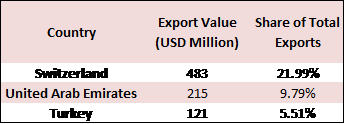
On the exports side, the top three destinations by August 2026 were Switzerland, United Arab Emirates, and Turkey capturing respective shares of 21.99%, 9.79% and 5.51% of the total value of exports. The top exported products were Pearls, precious stones and metals (31.38%) at $689 million, Base metals and articles of base metal (16.12%) at $354 million, and Prepared foodstuffs, beverages, tobacco (13.30%) at $292 million.
By: Marybel Estephan